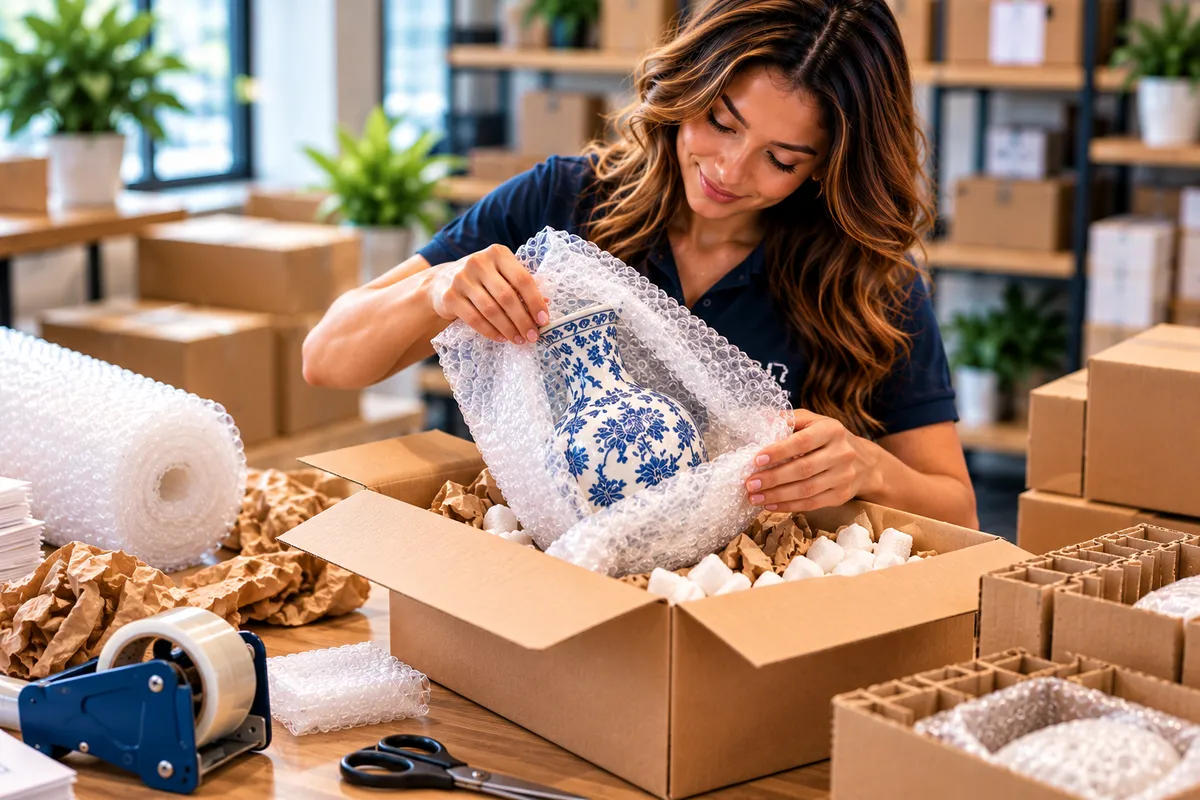
Before You Pack That Fragile Item, Don't Use the Box Yet
Before You Pack That Fragile Item, Don't Use the Box Yet
You have a fragile item ready to ship.
You find a box.
It looks about the right size.
So you put the item inside, add some packing material, tape it shut, and you're done.
Not so fast.
Before you even choose the box, there are a few things you should consider.
Fragile items can be damaged by impact, movement, pressure, vibration, and inadequate cushioning. And one of the biggest mistakes people make is choosing the box before thinking about how the item needs to be protected.
The box is only one part of the protection system.
Before you pack the item, understand what you're protecting—and what the package may experience along the way.
Start With the Item, Not the Box
The first question shouldn't be:
"What box do I have?"
It should be:
"What does this item need to stay protected?"
Consider:
Size
Shape
Weight
Fragility
Surface finish
Protruding parts
Moving components
Breakable areas
Sensitivity to pressure
A glass item, electronic device, framed picture, and ceramic product may all need completely different packing approaches.
There isn't one packing method that works for every fragile shipment.
Identify the Most Vulnerable Parts
Not every part of an item is equally fragile.
Before packing, inspect it carefully.
Ask:
What is most likely to break?
For a glass object, it could be the edges.
For an electronic device, it could be a screen.
For a framed item, it could be the glass or corners.
For an item with moving parts, internal components may need additional protection.
Understanding the weak points helps determine where cushioning and separation are most important.
Measure the Item First
Don't guess the box size.
Measure the item before selecting packaging.
Consider:
Length
Width
Height
Weight
Then account for the protective material that needs to surround it.
A box that's barely larger than the item may not provide enough room for appropriate cushioning.
A box that's dramatically larger may allow too much movement.
The goal isn't the biggest box or the smallest box. It's the right amount of protective space.
Why a Little Extra Space Matters
Fragile items generally shouldn't sit directly against the walls of a shipping box.
The package may experience impacts during transportation.
If the item is pressed directly against the box wall, there may be little protection between the item and the outside force.
Appropriate cushioning creates a protective buffer.
That buffer can help absorb some of the impact before it reaches the item.
But Too Much Empty Space Can Be a Problem, Too
Here's the other side of the equation.
If there's too much empty space, the item may move around inside the box.
Movement can create:
Repeated impacts
Shifting
Friction
Contact between multiple items
Pressure against the box walls
That's why filling the box with random material isn't necessarily enough.
The objective is to secure the item and limit unnecessary movement.
Choose the Right Cushioning Material
Different packing materials provide different types of protection.
Depending on the shipment, you may use:
Bubble cushioning
Kraft paper
Foam
Air pillows
Protective sleeves
Corrugated inserts
Dividers
Specialized packaging
The right material depends on the item.
For example, cushioning that works well for lightweight products may not provide sufficient support for a heavier object.
Don't Rely on One Layer of Protection
Fragile items often benefit from multiple layers of protection.
Think of packaging as a system:
Item → Protective wrapping → Cushioning → Box → Secure sealing
For particularly delicate items, additional internal separation may be appropriate.
The objective is to prevent the item from coming into direct contact with hard surfaces and to reduce unnecessary movement.
Protect Corners and Edges
Corners and edges can be especially vulnerable.
This is particularly important for:
Picture frames
Mirrors
Furniture components
Electronics
Ceramics
Certain equipment
Additional corner protection may help reduce damage from impacts.
Don't assume that wrapping the entire item automatically protects its most vulnerable areas.
Keep Fragile Items From Touching Each Other
If you're shipping multiple fragile items in one box, don't simply place them together.
Each item should have appropriate protection and separation.
Without sufficient separation, one item can collide with another during transportation.
Use appropriate:
Dividers
Individual wrapping
Cushioning
Internal supports
The goal is to create a stable arrangement inside the package.
Don't Use the Product Box as Your Only Protection
The original retail box can be useful.
But a retail package isn't always designed for every shipping situation.
If you're shipping a fragile product, consider whether the original packaging provides enough protection for the journey.
Depending on the item, an additional outer shipping box and appropriate cushioning may be appropriate.
Check the Box Before You Use It
Before placing a fragile item inside a box, inspect the box itself.
Look for:
Crushed corners
Tears
Weak seams
Water damage
Holes
Excessive wear
Previous shipping damage
A damaged box may not provide the structural support you need.
If the packaging is already compromised, it's worth choosing a better container.
New Doesn't Always Mean Better—But Condition Matters
You don't necessarily need a brand-new box for every shipment.
A clean, sturdy box in good condition may be perfectly useful for some shipments.
What matters is whether the box is:
Strong enough
Clean
Dry
Structurally sound
Appropriate for the item's size and weight
For valuable or particularly fragile items, using suitable new packaging may provide additional confidence.
Don't Forget the Bottom of the Box
One common mistake is focusing entirely on the top and sides.
The bottom matters, too.
Before placing the item inside, consider whether there is enough cushioning beneath it.
The item shouldn't sit directly against the bottom surface.
Creating an appropriate protective layer underneath can help provide a buffer against impacts.
Then Protect the Top
After positioning and securing the item, consider the space above it.
You don't want the item pressing directly against the top of the box.
Appropriate cushioning above the item can provide additional protection.
The goal is to create protection around the item—not just on one side.
Give the Package a Gentle Movement Test
Once everything is packed but before finalizing the shipment, check whether the item moves excessively.
A properly prepared package should not have significant internal movement.
If you can hear or feel the item shifting substantially, open the package and adjust the internal protection.
Don't assume that sealing the box will solve the problem.
Don't Overpack Without Thinking
More packing material doesn't automatically mean better protection.
Too much material can:
Put pressure on the item
Make the package difficult to close
Increase package size
Add unnecessary weight
Make the packing process less efficient
The objective is appropriate protection, not simply maximum material.
Consider the Journey, Not Just the Starting Point
Your package may experience more than you see at the shipping counter.
It could go through:
Pickup → Sorting → Transportation → Distribution → Delivery
During that journey, packages can be moved, stacked, transferred, and handled multiple times.
That's why fragile-item packaging needs to account for the entire journey.
Labeling Helps, But Don't Depend on It
You may choose to identify a package as fragile when appropriate.
But a fragile label shouldn't replace proper packaging.
Think of labeling as an additional communication tool.
The package should still be able to protect its contents even when handled normally.
Don't Forget the Shipping Environment
Consider where the package is going.
Shipping conditions may vary based on:
Distance
Weather
Temperature
Humidity
Transportation method
Time in transit
Some products are particularly sensitive to environmental conditions.
For those shipments, additional protective measures may be necessary.
Fragile Shipping Requires More Than Wrapping
One of the most common misconceptions is:
"Just wrap it in bubble wrap."
Bubble cushioning can be useful, but fragile shipping involves more than wrapping.
You also need to consider:
Box strength
Item positioning
Internal movement
Cushioning around all sides
Weight distribution
Sealing
Label placement
A good packing process considers the entire package system.
When Professional Packing Makes Sense
Some items are simply too valuable, delicate, unusual, or difficult to package casually.
Consider professional packing assistance for items such as:
Fragile collectibles
Artwork
Glass items
Electronics
Valuable equipment
Delicate business materials
Oddly shaped objects
Professional packing can help you choose appropriate materials and create a more secure package.
A Simple Fragile-Packing Checklist
Before shipping a fragile item, ask:
✓ Did I inspect the item?
✓ Did I identify its most vulnerable areas?
✓ Did I measure it before choosing the box?
✓ Is the box strong and undamaged?
✓ Is there adequate cushioning underneath?
✓ Is the item protected on all sides?
✓ Can the item move around inside?
✓ Are multiple items properly separated?
✓ Is the top protected?
✓ Is the package securely sealed?
✓ Is the shipping label accurate and securely attached?
✓ Is the selected shipping service appropriate?
If you can confidently answer these questions, you've taken important steps toward preparing the package properly.
How Ship It - Bay & Beyond Can Help
At Ship It - Bay & Beyond, we help customers prepare packages for the journey—not just put something in a box.
Our professional packing and shipping services can help with:
Fragile items
Carefully packaged shipments
Packing materials
Box selection
Protective cushioning
Shipping preparation
Package receiving
Carrier shipping
We also offer:
Private mailboxes
Virtual mailbox services
Printing
Copying
Document scanning
Secure document shredding
Notary services
Fingerprinting
Passport photos
Business formation support
Office services
If you're unsure how to pack something fragile, getting professional assistance can help take some of the guesswork out of the process.
Proudly Serving the Tampa Bay Area
Ship It - Bay & Beyond proudly serves:
St. Petersburg
Tampa
Clearwater
Largo
Pinellas Park
Seminole
Gulfport
Kenneth City
Treasure Island
St. Pete Beach
Madeira Beach
Indian Rocks Beach
Indian Shores
Redington Beach
North Redington Beach
Redington Shores
Safety Harbor
Oldsmar
Dunedin
Palm Harbor
Tarpon Springs
Belleair
Belleair Bluffs
Lealman
Pinellas County
Hillsborough County
Surrounding communities
Whether you need professional packing & shipping, printing, a private or virtual mailbox, notary, fingerprinting, secure shredding, document scanning, copying, passport photos, business formation, U-Haul, moving supplies, or other office services, Ship It - Bay & Beyond is your trusted local partner.
The Bottom Line
Before you reach for the first box you see, stop.
Look at the item.
Understand its vulnerabilities.
Measure it.
Choose appropriate protective materials.
Then select a box that gives the item enough room for protection without creating unnecessary movement.
Because fragile shipping isn't about finding a box that fits.
