The Shipping Experience Starts Before the Package Leaves: A Guide for Small Businesses
The Shipping Experience Starts Before the Package Leaves
When customers think about shipping, they often think about what happens after the package leaves.
They watch the tracking number.
They check the delivery date.
They wait for the notification.
But for businesses, the shipping experience actually begins much earlier.
It starts when the order comes in.
It continues through:
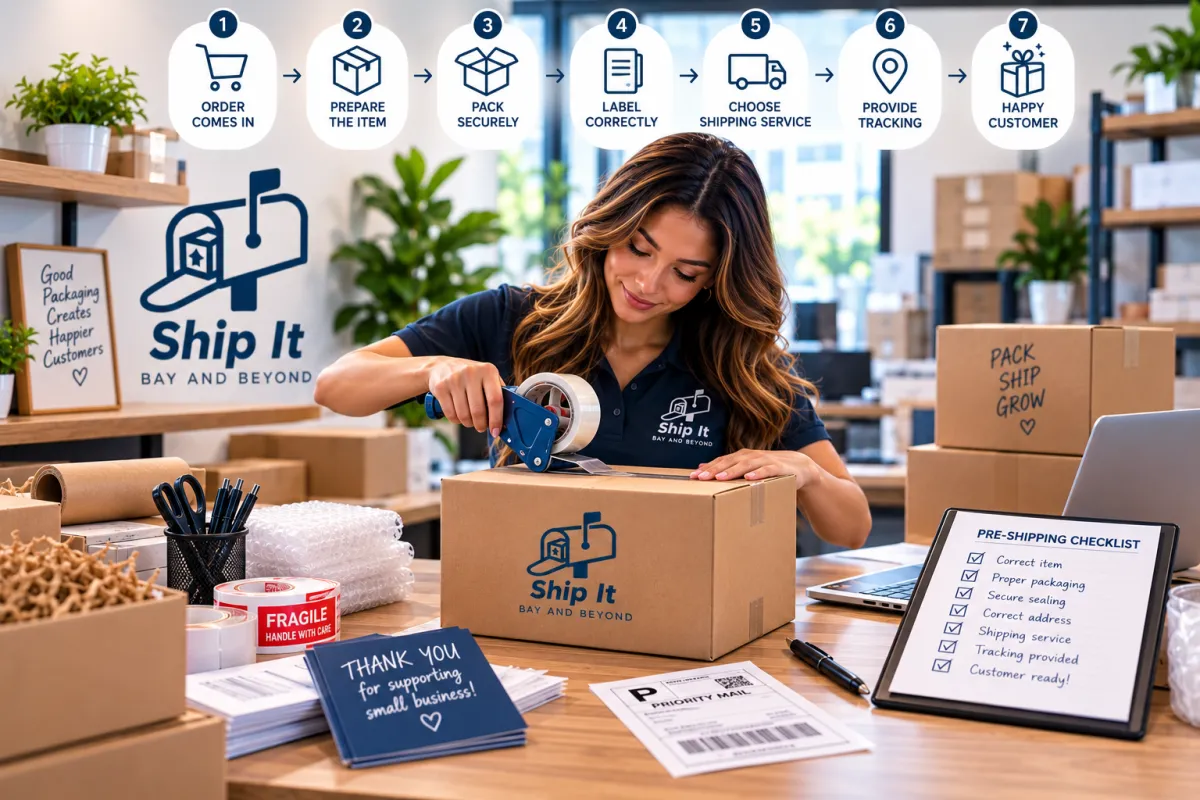
Product preparation → Packaging → Labeling → Carrier selection → Tracking → Delivery → Unboxing
Every step can affect what the customer ultimately experiences.
A package doesn't simply need to arrive.
It needs to arrive accurately, securely, and in a condition that reflects the care behind the business.
Good shipping isn't just about getting a package from Point A to Point B. It's about everything that happens before, during, and after the journey.
Why Does the Shipping Experience Start Before Shipping?
The carrier doesn't receive a finished customer experience.
They receive a package.
The business is responsible for preparing that package for the journey.
That means decisions made before the package leaves can influence:
Protection
Delivery accuracy
Shipping costs
Customer expectations
Brand perception
If the package isn't properly prepared, the shipping process is already starting with a problem.
Step One: Know What You're Shipping
Before choosing a box or shipping service, understand the item.
Ask:
Is it fragile?
Is it heavy?
Is it liquid?
Is it valuable?
Does it have sharp edges?
Is it sensitive to moisture?
Does it need special handling?
Can it move around inside the package?
Different products require different packaging approaches.
A solution that works for clothing may not be appropriate for glassware.
A box designed for lightweight items may not be suitable for a heavy product.
Packaging should match the item—not simply whatever box happens to be available.
Packaging Is the First Line of Protection
The purpose of packaging isn't just to make a shipment look attractive.
Its primary job is to protect what's inside.
Appropriate packaging can help reduce the risk of:
Impact damage
Scratching
Crushing
Movement
Moisture exposure
Broken components
The exact packaging needed depends on the product and shipping conditions.
For fragile items, that may mean using appropriate cushioning and preventing excessive movement.
For heavier items, the box and internal support need to be capable of handling the weight.
Don't Assume Bigger Means Safer
It might seem logical to put a small product into a much larger box with lots of filler.
But oversized packaging isn't automatically better.
Excess space can allow products to move around during handling.
It can also increase:
Packaging material
Void fill
Storage requirements
Package dimensions
Potential shipping costs
The goal is generally to use appropriately sized packaging with adequate protection.
The Right Packing Materials Matter
Different materials serve different purposes.
Depending on the shipment, businesses may use:
Corrugated boxes
Bubble cushioning
Kraft paper
Foam
Air pillows
Protective sleeves
Dividers
Tape
Specialty packaging
The right combination depends on the item.
A good packing process considers how the product might be handled during transportation and provides appropriate protection accordingly.
Secure Sealing Matters
Even a perfectly packed box can become a problem if it isn't properly sealed.
Shipping packages may encounter:
Movement
Stacking
Conveyor systems
Handling
Temperature changes
Repeated transfers
A secure seal helps keep the package intact throughout the journey.
Businesses should use appropriate packaging tape and apply it securely to the box's seams.
The Shipping Label Is Part of the Process
Before the package leaves, someone needs to make sure the shipping information is correct.
Double-check:
Recipient name
Street address
City
State
ZIP code
Return address
Tracking information
Special instructions where applicable
A beautifully packaged shipment with an incorrect address can still create a poor customer experience.
Accuracy is part of shipping quality.
Choosing the Shipping Service Matters
Not every package needs the same shipping solution.
Depending on the situation, businesses may consider factors such as:
Delivery speed
Package size
Package weight
Destination
Tracking
Cost
Insurance or declared-value options where applicable
The cheapest option isn't automatically the best option.
The fastest option isn't automatically necessary.
The right choice depends on what the shipment requires and what the customer expects.
Shipping Costs Start With Packaging Decisions
Businesses often think about shipping costs only after the package is ready.
But packaging choices can influence the final cost.
Consider:
Package dimensions
Weight
Packaging materials
Number of packages
Shipping destination
Delivery speed
In some carrier systems, dimensional measurements can affect pricing.
That's another reason appropriately sized packaging can matter.
Tracking Is Part of the Customer Experience
Once the package leaves, the customer usually wants one thing:
To know where it is.
Tracking information can reduce uncertainty.
Customers may want to know:
Has it shipped?
Where is it now?
When should it arrive?
Has there been a delay?
Was it delivered?
Providing accurate tracking information can make the waiting period easier for customers.
Communication Can Make Delays Easier to Manage
Shipping delays can happen.
Weather, carrier disruptions, incorrect addresses, operational issues, and other circumstances can affect delivery.
Businesses can't control every part of the transportation process.
But they can control communication.
If a delay occurs, clear communication can help customers understand:
What happened
Whether the shipment is still moving
What they should expect next
Who they should contact if they have questions
Sometimes the problem isn't simply the delay.
It's the uncertainty around the delay.
The Package Should Match the Customer's Expectations
Customers form expectations before the package arrives.
Those expectations may come from:
Product photos
Website descriptions
Marketing
Shipping promises
Order confirmations
The physical package should reinforce those expectations.
If a business presents itself as highly professional online but sends products in damaged or poorly prepared packaging, there's a disconnect.
That's why shipping should be considered part of the broader brand experience.
The Unboxing Experience Starts With Preparation
Customers may remember the moment they open a package.
A thoughtful unboxing experience can include:
Secure packaging
Clean presentation
Organized contents
Helpful instructions
Thank-you cards
Reorder information
QR codes
Brand-consistent materials
Not every business needs elaborate packaging.
The important thing is that the experience feels intentional.
Packaging Shouldn't Sacrifice Practicality for Appearance
It's tempting to focus heavily on aesthetics.
Custom boxes, tissue paper, stickers, ribbons, inserts, and other elements can create a memorable presentation.
But they shouldn't compromise the practical purpose of the package.
Always prioritize:
Protection → Accuracy → Security → Practicality → Presentation
A beautiful box that arrives damaged isn't a successful shipping experience.
Shipping Is Part of Your Brand
Customers don't separate every part of their experience as neatly as businesses do.
They may not think:
"The product was good, but the shipping department was bad."
Instead, they may simply think:
"That was a frustrating experience."
The shipping process becomes part of their overall impression of the business.
That's why shipping can contribute to:
Brand perception
Customer satisfaction
Repeat purchases
Reviews
Referrals
Small Businesses Can Improve Shipping Without Complicating It
You don't need a massive logistics department to improve your shipping experience.
Start with the basics:
Create a Packing Checklist
Make sure every package goes through the same basic quality checks.
Standardize Common Shipments
Develop packaging guidelines for frequently shipped products.
Double-Check Addresses
A few seconds of verification can prevent avoidable problems.
Use Appropriate Packaging
Match the box and protective materials to the product.
Provide Tracking
Give customers the information they need to follow their shipment.
Communicate Clearly
Set realistic expectations and explain delays when they occur.
Review Problems
If something arrives damaged, determine what happened and improve the process.
A Simple Pre-Shipping Checklist
Before a package leaves your business, ask:
Product
Is the correct item being shipped?
Is it in good condition?
Packaging
Is the box appropriate?
Is the item adequately protected?
Can it move excessively inside?
Sealing
Is the package securely closed?
Are the seams properly taped?
Label
Is the shipping address correct?
Is the label securely attached and readable?
Shipping
Is the selected service appropriate?
Is tracking available where needed?
Customer
Has the customer received the appropriate shipping information?
Are expectations clear?
These small checks can become a repeatable system.
Professional Packing Can Be Especially Helpful for Fragile Items
Some shipments are simply more difficult to prepare.
Fragile products may require additional consideration around:
Cushioning
Box strength
Internal movement
Separation between items
External protection
If you're unsure how to prepare a valuable or delicate shipment, professional packing assistance may be worth considering.
How Ship It - Bay & Beyond Can Help
At Ship It - Bay & Beyond, we help customers prepare shipments before they enter the carrier network.
Our packing and shipping services can help with:
Professional packing
Packaging materials
Shipping preparation
Carrier shipping
Package receiving
Private mailboxes
Virtual mailbox services
We also provide additional business services, including:
Printing
Copying
Document scanning
Secure document shredding
Notary services
Fingerprinting
Passport photos
Business formation support
Office services
Whether you're shipping a fragile item, sending business documents, fulfilling customer orders, or simply want help preparing a package correctly, professional packing and shipping can help make the process easier.
Proudly Serving the Tampa Bay Area
Ship It - Bay & Beyond proudly serves:
St. Petersburg
Tampa
Clearwater
Largo
Pinellas Park
Seminole
Gulfport
Kenneth City
Treasure Island
St. Pete Beach
Madeira Beach
Indian Rocks Beach
Indian Shores
Redington Beach
North Redington Beach
Redington Shores
Safety Harbor
Oldsmar
Dunedin
Palm Harbor
Tarpon Springs
Belleair
Belleair Bluffs
Lealman
Pinellas County
Hillsborough County
Surrounding communities
Whether you need professional packing & shipping, printing, a private or virtual mailbox, notary, fingerprinting, secure shredding, document scanning, copying, passport photos, business formation, or office services, Ship It - Bay & Beyond is your trusted local partner.
The Bottom Line
The shipping experience doesn't begin when the package is handed to the carrier.
It begins much earlier.
It begins with:
Choosing the right packaging.
Protecting the product.
Checking the address.
Sealing the box.
Selecting an appropriate shipping service.
Providing accurate tracking.
Setting realistic expectations.
Every one of those steps contributes to what the customer ultimately experiences.
