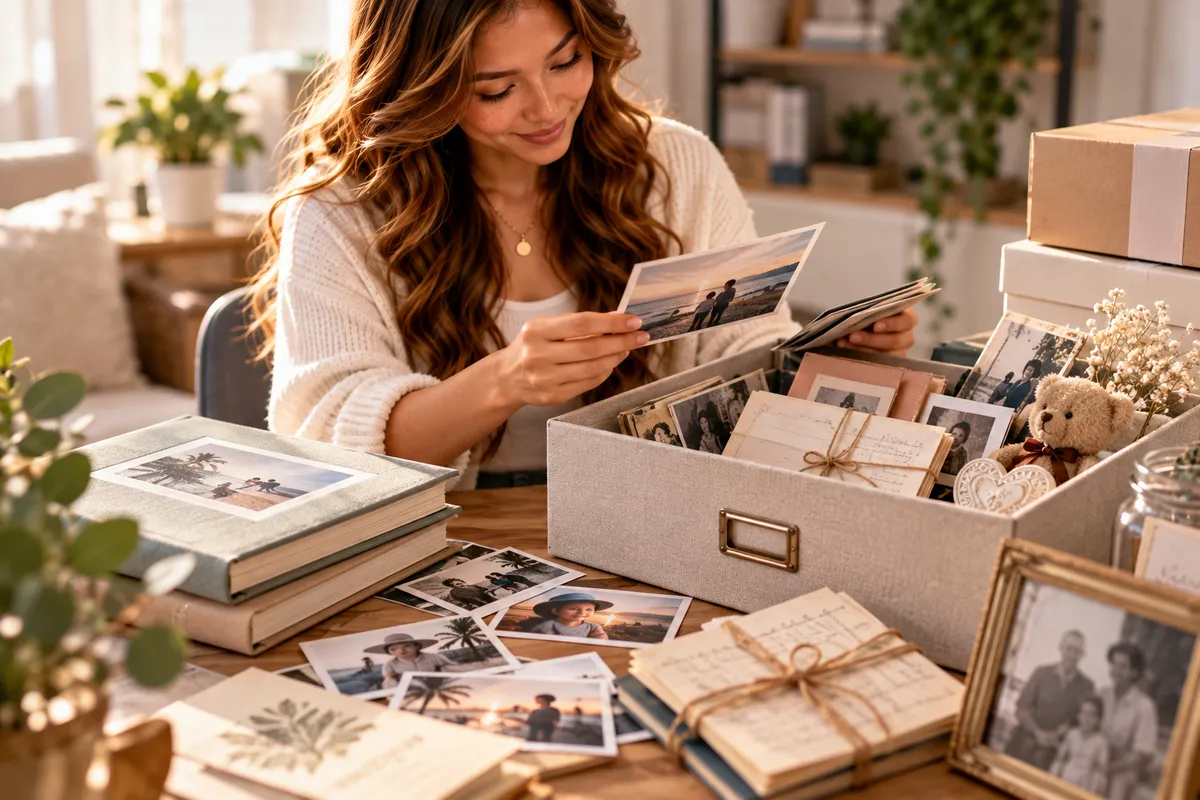
The Things We Keep Because They Mean Something: Memories, Sentiment, and Storage
The Things We Keep Because They Mean Something
Introduction
Some things are easy to replace.
A notebook. A coffee mug. A picture frame.
But sometimes, an ordinary object holds a memory that makes it impossible to replace.
A handwritten letter from someone you love. Your child's first drawing. An old photograph from a family vacation. A graduation certificate that represents years of hard work. A small souvenir from a trip you'll never forget.
These things may not be worth much money, but their emotional value can be enormous.
And that's why we keep them.
We don't hold on to everything because it's valuable. Sometimes, we hold on because the memory is.
Whether you're organizing your home, preparing to move, or sorting through years of accumulated belongings, knowing how to preserve the things that matter can help protect more than just physical objects.
It can help preserve the stories attached to them.
1. Why Do We Keep Sentimental Items?
People often keep objects because they connect them to a person, experience, or important moment in life.
A concert ticket might remind you of your first date. A handwritten recipe may bring back memories of cooking with a grandparent. A child's drawing can remind you of a stage of life that passed far too quickly.
These items become personal reminders of experiences that cannot be recreated exactly.
Sentimental belongings may represent:
Family traditions
Important milestones
Relationships and friendships
Childhood memories
Personal achievements
Travel experiences
Moments of change or growth
The item's financial value may be insignificant compared with what it represents.
That's why organizing sentimental belongings requires a different approach from decluttering ordinary household items.
The goal isn't to keep everything. It's to protect what genuinely matters to you.
2. Your Most Meaningful Possessions May Be the Smallest
Not every treasured possession needs a large storage box.
Some of the most meaningful items take up very little space.
Think about:
A handwritten note
A wedding photograph
A child's first birthday card
A medal from a competition
A postcard from a loved one
A ticket from a memorable event
A small gift from someone special
Because these objects are small, they can easily become mixed with ordinary paperwork or placed somewhere you won't remember.
A simple way to protect them is to create a dedicated keepsake box or memory folder.
Group items by person, year, occasion, or life stage. Use labels so you can find what you're looking for without having to search through every container.
A little organization can make treasured items easier to enjoy for years to come.
3. Photographs Preserve Moments We Can't Recreate
Photographs are among the most commonly treasured possessions.
They capture people, places, celebrations, and everyday moments that may become more meaningful as time passes.
But printed photographs can be damaged by:
Moisture
Excessive heat
Direct sunlight
Dust
Bending or creasing
Improper storage materials
To help preserve your photographs:
Store them in a cool, dry location.
Keep them away from direct sunlight.
Use photo-safe sleeves or albums.
Avoid attaching adhesive directly to the image.
Handle older photographs carefully.
Consider scanning important photographs to create digital copies.
Digital copies can make photographs easier to share and provide another way to access the images if the originals are damaged.
However, digital files also need protection. Keep appropriate backups and check periodically that the files remain accessible.
A photograph may capture one moment, but preserving it can keep that moment accessible for generations.
4. Important Documents Can Carry Emotional Value, Too
Not every meaningful possession is decorative.
Some documents represent years of effort, family history, or significant life events.
Examples include:
Graduation certificates
Wedding documents
Letters from loved ones
Family records
Awards and recognition
Historical photographs
Personal journals
Documents connected to important milestones
These items may deserve special attention because they can be difficult or impossible to replace.
Consider organizing them separately from everyday paperwork.
Use appropriate protective storage, label folders clearly, and consider making digital copies of documents that can safely and legally be reproduced.
For original certificates, legal documents, and historical records, check the recommended preservation methods before placing them in plastic sleeves or other storage materials.
Not all paper is ordinary paperwork. Some pages tell the story of a life.
5. Sentimental Items Need Protection During a Move
Moving can be an emotional experience.
You're not just transporting furniture and boxes. You're moving belongings connected to familiar places, important people, and years of memories.
Unfortunately, sentimental items can be particularly vulnerable during a move.
A box may be dropped. A frame may crack. A keepsake may become buried among unrelated belongings.
Before packing, identify the items you would be most upset to lose.
Then take extra precautions.
For fragile keepsakes
Wrap each item individually.
Use suitable cushioning.
Choose a sturdy box that fits the contents appropriately.
Fill empty spaces to reduce movement.
Label boxes clearly for handling.
Keep especially valuable or irreplaceable items with you when practical.
For delicate antiques, artwork, or highly valuable collections, specialized packing may be appropriate.
Don't assume that a box marked "fragile" is enough on its own. Good packing protects the item before the label ever needs to be read.
6. What About Letters, Journals, and Handwritten Notes?
Digital communication is convenient, but handwritten messages can feel different.
A letter preserves more than words. It can retain someone's handwriting, expressions, and personal way of communicating.
Journals may capture thoughts and experiences that would otherwise exist only in memory.
To preserve these items:
Keep them away from damp areas.
Avoid folding or unfolding fragile paper repeatedly.
Store them in clean, suitable archival materials when appropriate.
Keep them away from direct sunlight.
Scan or photograph especially meaningful pages if suitable.
Protect sensitive personal information from unnecessary access.
If you scan private letters or journals, store the digital files securely. Not every personal document needs to be uploaded to a shared cloud folder or sent through email.
Preservation should include both the physical item and the privacy of the person who created it.
7. When Should You Keep Something—and When Should You Let It Go?
Sentimental organizing can be difficult because every item may seem to tell a story.
But keeping everything can make it harder to find and appreciate the things that matter most.
Instead of asking only, "Should I throw this away?" consider asking:
What does this item mean to me?
Does it represent a memory I want to preserve?
Is this the only copy?
Could I preserve the memory another way?
Would a photograph be enough?
Is the item in good condition?
Do I have a safe place to store it?
For example, you may not need to keep every greeting card you've ever received. You might choose a few especially meaningful cards and photograph the others before responsibly disposing of them.
The right decision is personal.
You don't have to discard something simply because it isn't practical. And you don't have to keep everything to prove that a memory matters.
Sometimes preserving the memory is more important than preserving every object.
8. Create a Memory Box That Tells a Story
A memory box can turn a collection of scattered belongings into a meaningful personal archive.
Rather than placing everything into one container, organize your keepsakes intentionally.
You might create separate boxes for:
Family history
Childhood memories
School and graduation milestones
Weddings and anniversaries
Travel experiences
Important personal achievements
Add simple labels or dates where helpful.
You can also include a short note explaining why a particular item matters.
Imagine someone finding an old souvenir years from now. Without context, it might look like an ordinary object. With a note about the trip, the people who were there, and what made the experience special, it becomes part of a story.
A memory box doesn't need to be expensive or elaborate.
It simply needs to protect the items and preserve enough context for their meaning to remain clear.
9. Digital Preservation Can Help Keep Memories Accessible
Some memories are already digital.
Family photographs, videos, scanned letters, and recordings may be stored on phones, computers, or online accounts.
But digital storage can also create problems when files are scattered across devices or accounts.
You may eventually discover that you can't remember where a photograph was saved or which device contains an important video.
To make digital memories easier to preserve:
Gather files from your devices and accounts.
Organize them by year, person, or occasion.
Use descriptive filenames where practical.
Back up important files in more than one appropriate location.
Protect accounts with strong passwords and multifactor authentication.
Periodically check that your files can still be opened.
If you scan family photographs or paper keepsakes, keep the originals when their physical condition or emotional value warrants it.
A digital copy is useful, but it may not fully replace the experience of holding an original handwritten letter or looking at an old photograph.
10. Protect Keepsakes From Unexpected Damage
Sometimes the biggest threat to sentimental items isn't everyday handling. It's an unexpected event.
Water damage, fire, excessive humidity, pests, and accidental disposal can all affect treasured belongings.
You can't eliminate every risk, but you can take practical precautions.
Consider:
Keeping important keepsakes away from damp areas.
Avoiding storage near pipes or potential leaks.
Using suitable containers for the materials being stored.
Keeping irreplaceable items off floors where water could accumulate.
Creating digital copies of selected photographs and documents.
Reviewing storage areas periodically.
For particularly valuable collections or historically important materials, professional conservation advice may be worthwhile.
The objective is to avoid discovering too late that something irreplaceable was stored in a place that couldn't protect it.
11. Don't Forget the Memories Behind the Objects
One of the most meaningful ways to preserve sentimental belongings is to document their stories.
You don't need a formal archive or a complicated family-history project.
Start small.
Write down:
Who gave you the item
Where it came from
When you received it
Why it matters
What you remember about the occasion
You can write these details on a separate card, in a journal, or in a digital note associated with a photograph.
This is especially useful for family heirlooms and objects passed between generations.
An item may survive for decades, but its story can be lost if nobody records it.
Preserving an object protects what you can touch. Preserving its story helps protect what it means.
12. How to Organize Sentimental Items Without Feeling Overwhelmed
If you've accumulated years of photographs, documents, and keepsakes, don't try to organize everything in one afternoon.
Instead, create a manageable process.
Step 1: Start With One Category
Choose photographs, letters, certificates, or another specific group.
Step 2: Separate Important Items
Identify objects that are irreplaceable or particularly meaningful.
Step 3: Check Their Condition
Look for signs of moisture, fading, tearing, or other damage.
Step 4: Choose Appropriate Storage
Use containers and materials suitable for the type of item.
Step 5: Record the Stories
Add dates, names, or short notes where useful.
Step 6: Create Digital Copies When Appropriate
Scan or photograph items that you want to share or access digitally.
Step 7: Review Your Collection Periodically
Make sure your keepsakes remain protected and accessible.
You don't need a perfect system.
You need one that helps you find, appreciate, and protect the things you care about.
How Ship It - Bay & Beyond Can Help
At Ship It - Bay & Beyond, we understand that some packages and documents contain more than ordinary belongings. They may hold family memories, personal milestones, or items that matter deeply to the people sending and receiving them.
Our services can help with several practical parts of preserving and moving meaningful possessions.
Professional packing and shipping: Help prepare appropriate items for transport using suitable packing materials and methods.
Printing and copying: Create copies of selected documents, photographs, and personal materials when appropriate.
Document scanning: Help convert paper documents into digital files for easier organization and access.
Secure document shredding: Dispose of sensitive paperwork that no longer needs to be retained.
Private mailboxes: Receive eligible personal correspondence and packages at a dedicated location.
Virtual mailbox services: Explore available remote mail-management options.
Package receiving: Arrange receipt of eligible deliveries.
Notary services: Access qualifying notarization services for documents that require them.
U-Haul and moving supplies: Find practical support for moving and transporting belongings.
For fragile, valuable, or irreplaceable keepsakes, confirm the appropriate packing method and shipping options before sending them. Some items may require specialized handling or additional protection.
Ship It! Bay & Beyond
5420 Central Ave, St. Petersburg, FL 33707
Phone: 727-344-9052
Because memories matter, taking a little extra care with the items that represent them is worth the effort.
Proudly Serving the Tampa Bay Area
Ship It - Bay & Beyond proudly serves:
St. Petersburg
Tampa
Clearwater
Largo
Pinellas Park
Seminole
Gulfport
Kenneth City
Treasure Island
St. Pete Beach
Madeira Beach
Indian Rocks Beach
Indian Shores
Redington Beach
North Redington Beach
Redington Shores
Safety Harbor
Oldsmar
Dunedin
Palm Harbor
Tarpon Springs
Belleair
Belleair Bluffs
Lealman
Pinellas County
Hillsborough County
Surrounding communities
Whether you need professional packing and shipping, printing, a private or virtual mailbox, notary services, fingerprinting, secure shredding, document scanning, copying, passport photos, business formation support, U-Haul, moving supplies, or other office services, Ship It - Bay & Beyond is your local resource for everyday document and mailing needs.
The Bottom Line
Some belongings are valuable because of what they cost.
Others are valuable because of what they represent.
A handwritten letter, an old family photograph, a child's drawing, or a small souvenir can carry a meaning that no replacement could recreate.
You don't need to save every object to honor your memories. But the things you choose to keep deserve thoughtful care.
Organize them. Protect them from damage. Record their stories. Create digital copies where appropriate. And make sure the next generation understands why they matter.
