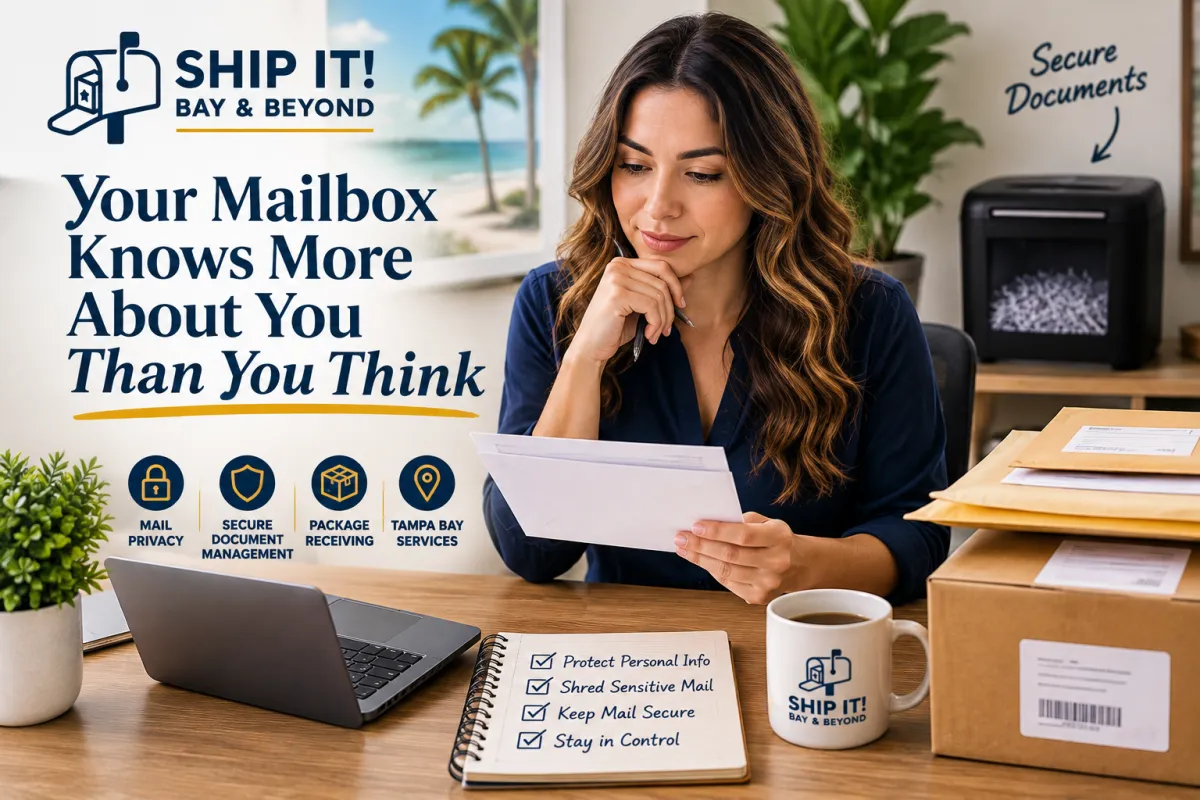
Your Mailbox Knows More About You Than You Think | Mail Privacy Tips
Your Mailbox Knows More About You Than You Think
Think about everything that arrives in your mailbox.
Bank statements.
Insurance documents.
Medical correspondence.
Tax information.
Bills.
Government notices.
Credit card offers.
Business documents.
Packages with your name and address.
Your mailbox may look ordinary, but the information arriving there can reveal a surprising amount about your life.
That's why managing your mail isn't just about staying organized.
It's also about protecting your privacy.
Your Mail Can Reveal More Than Your Name
A piece of mail can contain information that tells someone:
Where you live
Which companies you do business with
What financial institutions you use
What services you subscribe to
Where you shop
What organizations you belong to
Information about your business
Details about important transactions
One document by itself might seem harmless.
But several pieces of mail together can create a much more complete picture.
That's why mail privacy deserves attention.
1. Don't Let Sensitive Mail Sit Unattended
A common mistake is allowing important mail to accumulate.
You may be busy and think:
"I'll deal with it later."
But sensitive documents don't become less sensitive just because they're sitting unopened.
Make it a habit to collect and organize your mail regularly.
If you're expecting an important document, don't leave it sitting outside longer than necessary.
2. Know What Should Be Shredded
Not every piece of paper needs to be kept.
Once a document is no longer needed—and once you've confirmed that any applicable recordkeeping requirements have been met—consider securely disposing of sensitive paperwork.
Documents that may contain personal or confidential information can include:
Financial statements
Old bills
Tax-related documents
Insurance paperwork
Credit offers
Business records
Customer information
Documents containing account numbers
Simply throwing sensitive paperwork into the trash may expose information you intended to discard.
Shredding can provide a safer way to dispose of confidential paper records.
3. Be Careful With Your Address
Your mailing address is more than a location.
It's a piece of personal information.
Think carefully about where you publicly share it.
Depending on your circumstances, your address may appear on:
Business websites
Online directories
Invoices
Marketing materials
Public profiles
Shipping labels
Correspondence
For home-based businesses, using a dedicated business mailing solution may help create more separation between personal and professional life.
4. Packages Reveal Information Too
It's easy to think about mail as letters and documents.
But packages can contain information as well.
Shipping labels can display names and addresses, while the contents of a package may reveal purchasing habits, business activities, or other personal information.
If you're receiving frequent packages, think about how and where they're being delivered.
A private mailbox or package receiving service can provide an alternative for eligible deliveries.
5. Mail Privacy Matters for Businesses Too
Businesses receive information that shouldn't be casually exposed.
Think about:
Customer records
Vendor documents
Financial paperwork
Contracts
Invoices
Employee documents
Marketing materials
Business correspondence
If you're running a business from home, mixing personal and business mail can make organization and privacy more difficult.
Creating a dedicated system for business mail can help.
6. Don't Forget About Old Mail
Your current mailbox isn't the only place to think about.
Look around your home office, filing cabinets, desk drawers, and storage boxes.
How much old paperwork are you keeping?
Some documents may need to be retained for legal, tax, financial, or business reasons. Others may simply be taking up space.
Before disposing of anything important, determine whether you still need to keep it.
Then securely dispose of documents that no longer need to be retained.
7. Mail Management Is Part of Identity Protection
Identity protection isn't only about passwords and online accounts.
Your physical information matters too.
Good mail-management habits can include:
✔ Collecting mail regularly
✔ Reviewing important documents promptly
✔ Storing sensitive paperwork securely
✔ Shredding confidential documents when appropriate
✔ Being thoughtful about sharing your address
✔ Monitoring unexpected financial or account-related mail
✔ Using secure receiving options when appropriate
Small habits can create an important layer of protection.
8. A Private Mailbox Can Add Convenience and Separation
For some individuals and businesses, a private mailbox can provide a dedicated place to receive mail and eligible packages.
It may be particularly useful for:
Home-based businesses
Remote professionals
Entrepreneurs
Frequent travelers
Online shoppers
People who receive important correspondence
Businesses that want to separate business and personal mail
A private mailbox doesn't eliminate every privacy or security concern, but it can be part of a more organized mail-management strategy.
9. What About a Virtual Mailbox?
If you travel frequently or work remotely, a virtual mailbox may offer additional flexibility.
Depending on the provider and service, features may include:
Mail notifications
Digital mail management
Mail forwarding
Remote access to mail information
This can help you stay connected to physical correspondence even when you're not physically near your mailing location.
Available services vary, so review the specific features and requirements before choosing one.
10. Your Mailbox Can Become a Business Tool
Your mailbox doesn't have to be something you simply check.
It can become part of a larger system for managing your business.
A professional mail-management system can help you:
Separate personal and business correspondence
Receive eligible packages
Maintain a consistent mailing address
Organize business documents
Manage mail while traveling
Reduce unnecessary clutter
The goal is simple:
Make your mail work for you—not against you.
How Ship It - Bay & Beyond Can Help
At Ship It - Bay & Beyond, we help individuals, entrepreneurs, and businesses manage the physical side of modern life and business.
Our services include:
Private Mailboxes
Dedicated mailing solutions for personal or business use, subject to applicable requirements.
Virtual Mailboxes
Flexible mail-management options for people who aren't always in one location.
Package Receiving
A convenient option for receiving eligible packages.
Document Shredding
Secure disposal of eligible confidential paper documents that you no longer need.
Packing & Shipping
Professional packing and shipping services for personal and business shipments.
Printing & Copying
Business cards, flyers, brochures, documents, and marketing materials.
Document Services
Scanning and copying for your personal and business needs.
Notary Services
Convenient notary services for eligible documents.
Fingerprinting
Fingerprinting services for eligible employment, licensing, and other requirements.
Passport Photos
Professional passport photo services for eligible applications.
Proudly Serving the Tampa Bay Area
Ship It - Bay & Beyond proudly serves individuals, families, remote professionals, entrepreneurs, and businesses throughout the Tampa Bay area, including:
St. Petersburg
Tampa
Clearwater
Largo
Pinellas Park
Seminole
Gulfport
Kenneth City
Treasure Island
St. Pete Beach
Madeira Beach
Indian Rocks Beach
Indian Shores
Redington Beach
North Redington Beach
Redington Shores
Safety Harbor
Oldsmar
Dunedin
Palm Harbor
Tarpon Springs
Belleair
Belleair Bluffs
Lealman
Pinellas County
Hillsborough County
And surrounding communities.
Whether you need private or virtual mailbox services, package receiving, secure document shredding, professional packing and shipping, printing, copying, document scanning, notary services, fingerprinting, passport photos, or business support, Ship It! Bay & Beyond is your trusted local partner.
The Bottom Line
Your mailbox may seem ordinary.
But the information inside can tell a story about who you are, where you live, what you buy, who you do business with, and what matters to you.
That's why good mail management isn't just about organization.
It's about awareness.
Review your mail regularly. Protect sensitive documents. Shred paperwork you no longer need. Be thoughtful about sharing your address. And consider whether a private or virtual mailbox could make sense for your lifestyle or business.
Your information has value.
Treat it that way.
At Ship It - Bay & Beyond, we're here to help you manage your mail, packages, documents, and business needs with greater convenience and confidence.
Protect What Matters Question
How do you usually handle old mail with personal information?
I file it
I shred it
I throw it away
I keep everything just in case!
What's your mail-management habit? Share it in the comments!
Frequently Asked Questions
Why is mail privacy important?
Physical mail can contain personal, financial, business, and identifying information. Managing it carefully can help reduce unnecessary exposure of sensitive information.
What mail should I shred?
Consider securely shredding documents containing sensitive information once you're certain you no longer need to retain them. Examples can include old financial statements, bills, credit offers, and confidential business records.
Is a private mailbox more secure than a home mailbox?
A private mailbox can provide a dedicated location for receiving mail and eligible packages and may help separate business or personal correspondence from home. However, no receiving method eliminates every security or privacy risk.
Can a private mailbox be used for business mail?
A private mailbox can be useful for receiving business correspondence, but it may not satisfy every legal, licensing, tax, banking, or registration requirement. Always verify the requirements applicable to your business.
How can I better protect my personal information in the mail?
Collect mail regularly, secure sensitive documents, shred paperwork when appropriate, monitor unexpected correspondence, limit unnecessary sharing of your address, and consider secure mail-management options that fit your needs.
